Undergraduate Degrees

B.S. in Physics and Quantum Computing

Given the robust academic and industrial efforts to build quantum machines and information, there is a real need for students who are trained to adapt in both fields. This program allows students to bridge the gap between building quantum machines and systems with one to a few elements.

What can you do with a degree in physics and quantum computing?

Students have a broad range of professional opportunities. Many students go on to pursue graduate degrees in applied physics, computer science, mathematics, material sciences and engineering, and to work in fields like academia, industry, and research.

Top Employers of SCI Graduates*

PNC Financial Services
BNY Mellon
Amazon
Deloitte
CGI

Top Job Titles of SCI Graduates*

Software Engineer
Software Developer
Analyst
Technology Development Program
Quality Assurance

94.89%
post-graduation success rate for SCI majors*
$78,519
average annual salary for SCI majors*
317,700
average projected job openings per year for computer and IT occupations**

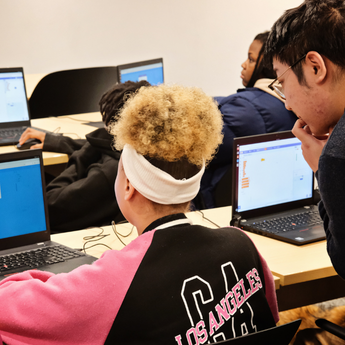
teacher looking over student's shoulderDegree Requirements

Graduation requirements differ among degrees. However, all degrees require a minimum of 120 passing credits with a minimum 2.00 overall GPA, completion of the School’s Foundation Courses, General Education Requirements, Major Requirements, Secondary Field of Study, and a Capstone Experience. Students must also satisfy the School of Computing and Information residency requirements.

View full bachelor's degree and general education requirements in the Pitt Course Catalog.

Accordion Container: Required Courses for the Major, Core Courses, Math

Required Courses for the Major

Mathematics Courses

  • Loading...
  • Loading...
  • Loading...
  • Loading...
  • Loading...

*Students can take MATH 1180 OR MATH 1185 instead of MATH 0280.

**Students can take MATH 1270 instead of MATH 0290.

Introductory Physics Courses

Students can take:

  • Loading...
  • Loading...

OR Students can take:

  • Loading...
  • Loading...
  • Loading...

Introductory and Intermediate Computer Science Courses

  • Loading...
  • Loading...
  • Loading...
  • Loading...

Intermediate and Advanced Physics Courses

  • Loading...
  • Loading...
  • Loading...
  • Loading...
  • Loading...

Advanced Computer Science Courses

  • Loading...
  • Loading...
  • Loading...

Physics Laboratory Courses

Students must choose five credits from the following:

  • Loading...
  • Loading...
  • Loading...
  • Loading...
  • Loading...

*Students can take PHYS 0520 instead of PHYS 0219.

All majors must complete a capstone experience prior to graduation. It is the intention that this mirror the format of the computer science capstone project (physics lacks an equivalent, though directed research is common among physics undergraduates). The requirement can be satisfied by one semester of directed research with a physics or computer science faculty member, or a CS Capstone Project (CS 1980, CS 1981). Alternately, students may instead undertake an internship (for CS this requires registration in CS 1900).

This group of courses is designed to prepare interested students for graduate studies in computer science or physics, and can also allow for the addition of specialized special topic or elective courses to the major given adequate enrollment and departmental resources. Currently the courses for the focus options are:

  • Loading...
  • Loading...
  • Loading...

OR

  • Three computer science courses (9 cr. total) at 1500 level or above

View full physics and quantum computing degree requirements in the Pitt Course Catalog.

Request Information


*77.99% knowledge rate of post-graduation survey data of SCI undergraduate students from 2019 to 2024. More data from Pitt's First Destination Survey is available on Pitt's Career Center website. 

**This information is from the U.S. Bureau of Labor Statistics Occupational Outlook Handbook