
September 8, 2026
In a collaboration between six researchers from the University of Pittsburgh, three of which come from the School of Computing and Information, a paper reflecting ten years of work was published just this year.
“Fostering Civic Data Literacy in Libraries: The Civic Switchboard Project” is an article published in the Library Trends journal. The paper is a culmination of the work of Eleanor Mattern, Marcia Rapchak, Chelsea Gunn, Aaron Brenner, Liz Monk, and Robert Gradeck.
The paper details the research and work behind The Civic Switchboard Project, which furthers the goal of developing libraries’ ability to find, understand, and use public data. Eleanor Mattern, a Department of Information Culture and Data Stewardship teaching associate professor and collaborator on this project, said the project focuses on the roles libraries can play in supporting the use of open data, such as data shared by the government or local civic organizations, within their communities.
“We have held workshops throughout the country, collected case studies of libraries doing community data work, and developed a guide to help libraries begin and continue these activities,” Mattern said.
The Civic Switchboard Project puts an emphasis on libraries as a source of spreading knowledge throughout a community. Mattern said this attention on libraries is due to their natural participation in community data work.
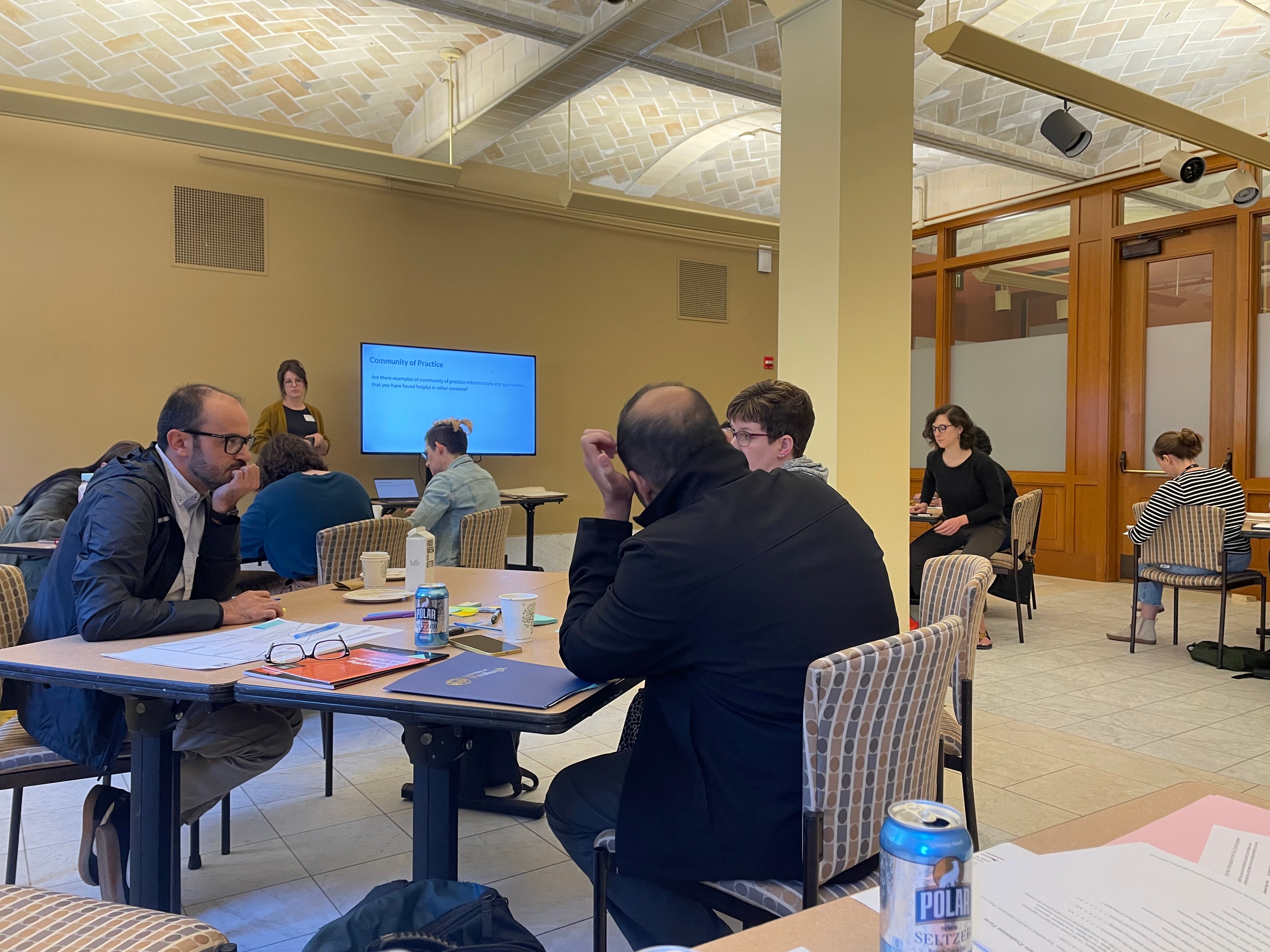
“Libraries have always helped people to find, evaluate, understand, and use information,” Mattern said. “We view library work that focuses on helping people use open data shared by governments and other organizations as a natural extension of this long-standing responsibility.”
Chelsea Gunn, a Department of Information Culture and Data Stewardship teaching associate professor and fellow collaborator of The Civic Switchboard Project, explained the importance of this project lies in allowing everyday people to understand data.
“In many aspects of life, there is an emphasis placed on data and making data-driven or data-informed decisions,” Gunn said. “The ability to access, interpret, ask questions of, and make meaning from data shouldn’t be limited to a select few. Having access to and being able to use data that might inform changes within our communities can be a form of power.”
The work of the Civic Switchboard project was supported by grants from the Institute of Museum and Library Services. Mattern said the support from these grants has allowed them to spread the goal of strengthening libraries’ roles in disseminating data information across the country.
“Through the support of the IMLS grants, the University of Pittsburgh has been able to further activity around community data work and libraries,” Mattern said. “Importantly, however, the funding has allowed us to learn from and bring together a national community of practice of library and local data workers who are interested in or participating in community data work.”
The publication in Library Trends was the work of six researchers, but Gunn emphasized that the collaboration between multiple important groups is what truly made the project possible.
“Throughout the process of developing and facilitating the Civic Switchboard institutes and working on this paper, I truly enjoyed the opportunity to learn from my collaborators, who bring so much expertise and care to their work,” Gunn said. “For me, this project is also a reminder of the incredible people we have in the Department of Information Culture and Data Stewardship, in the libraries, and at the Western PA Regional Data Center.”
Mattern said other scholarship that inspired this paper, including critical data studies and adult learning theories, are also a piece of this collaboration.
“This paper also represents the contributions of many collaborators over the past decade, including former collaborators, library and data partners, workshop participants, and field project awardees,” Mattern said. “It’s exciting to be able to formalize this shared work in print.”
Gunn explained that she has learned a lot through this process and hopes that those reading and utilizing the project get just as much out of it as she did.
“So many of the conversations that we had throughout that process have stayed with me and informed how I think about access to data and information,” Gunn said. “I’m glad that we are able to share some of those insights and experiences through this paper, and I hope that it will encourage more people to get involved in the Civic Switchboard project or use the resources available on the project website.”
To learn more about the Civic Switchboard Project, visit the project website.
Sarah George (A&S '28)
The Institute of Museum and Library Services
The Institute of Museum and Library Services is the primary source of federal support for the nation's libraries and museums. We advance, support, and empower America's museums, libraries, and related organizations through grant making, research, and policy development. IMLS envisions a nation where individuals and communities have access to museums and libraries to learn from and be inspired by the trusted information, ideas, and stories they contain about our diverse natural and cultural heritage. To learn more, visit www.imls.gov and follow us on Facebook and Twitter.